Instrumentalist Classic: Originally Published in February 1978
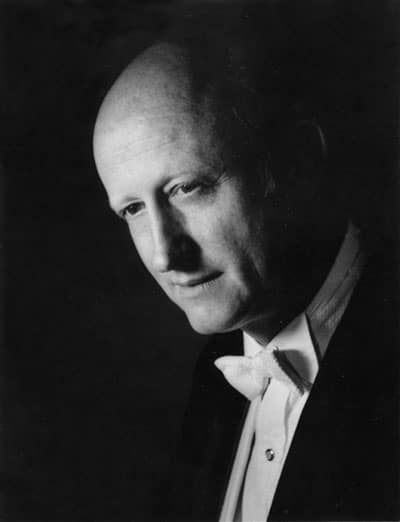
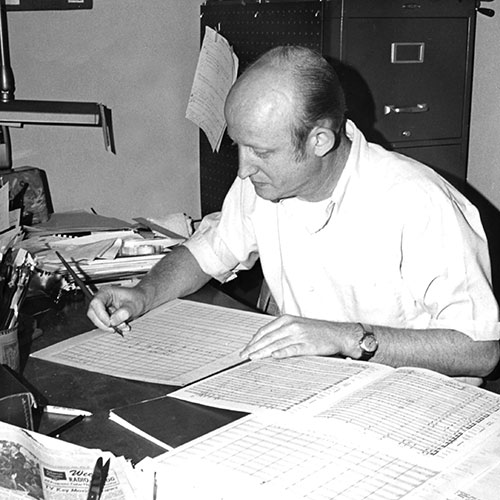
When this article was first published, W. Francis McBeth was professor of music, chairman of the theory-composition department, and resident composer at Ouachita University in Arkadelphia, Arkansas as well as a well-known guest conductor. His compositions for concert band are highly respected, frequently appearing on festival programs.
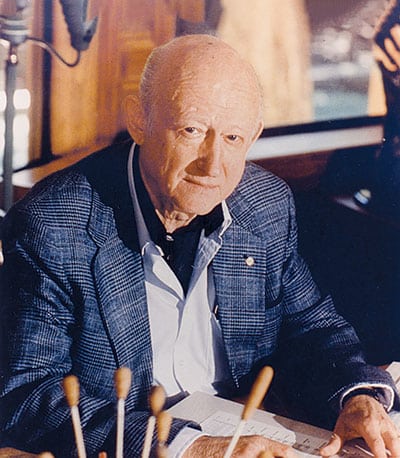
To attend a clinic by W. Francis McBeth is to guarantee yourself two things: you will learn something new or refresh yourself on a technique you had forgotten, and you will be entertained. Dr. McBeth, who talks fast for a Texan, says “Nobody has ever learned anything he wasn’t enjoying.” He sprinkles his clinics with a stockpile of humorous anecdotes that help him make his points, but “funny” he is not. Behind the animated facade is a dedicated musician with a serious purpose: to improve the performance of band music in this country. I had a chance to talk to Dr. McBeth when he was a clinician at the California Music Academy, California State University at Fullerton.
As you attend clinics and conduct bands across the country, what do you feel is the single biggest problem with bands today?
Interpretation. Much music is boring because of wrong interpretation. Wrong interpretation can make a good piece dull, and the greatest crime in teaching is to be dull. The problem is that technology took over. Now we’ve got to have technology; we’ve got to have good subdivision, balance, and pitch. But technology without musicality is just boring. It’s not a musical experience, it’s a competitive experience.
When you say interpretation, what specifically are you referring to?
Interpretation is the recreation of the composer’s intent, and 99 percent of this intent is written on the page. It is not a situation where the conductor has the prerogative to use his own interpretation.
The secret to interpretation is volumes [dynamics]. Interpretation is 20 percent tempos and 80 percent volumes.
In rehearsal, I work on interpretation even before the notes. I don’t care how good you are; if you don’t have interpretation, you might as well have not played.
What can band directors do to improve interpretation?
Number one, you must understand what the music says or does, and then you must change your attitude toward musicality. It’s a step beyond technique. Bad conductors conduct the score and not the band. They should try rehearsing from memory and get their head out of the score.
And you must use body effects when you conduct. Your body must do what the music does. Exaggerate everything in your conducting, and don’t mirror your hands. Mirrored hands destroy the importance of your left hand. The left hand should say, “Band, look up, I have something to tell you.”
Also, in off-contest time, play some simpler music that has fewer technical problems so you can have more opportunities to interpret.
After interpretation, what are some of the other big problems you are finding with bands today?
After interpretation would come balance and pitch, subdivision, and programming. Programming is part of our entertainment problem. We must not only be artists, we must entertain.
There is absolutely nothing in this world more boring than a poorly programmed concert. I hate to say this, but there aren’t many band concerts I’d drive across town to listen to because they are so boring. And I love band music.
People tend to program what bands can play with little regard to the order or overall effect. You’ve got to program dramatically. You’ve got to get the audience’s attention at the start, and then you have to use a slow work in there somewhere.
Slow music is where your band learns tone quality, breath support, interpretation, and balance. If you don’t have a slow piece on your concert, you’re missing a large area of teaching.
With my clinic bands, our programs are shorter than regular concerts. I usually do five pieces: an opener, a slow piece, a large work in the middle, a light number, and a large work at the end.
I never do an encore. I think an encore is the worst thing you can do. The audience likes to know when they can go, and you should leave the audience wanting more.
What do you look for in a rehearsal?
Discipline is the first order of business. A rehearsal should have an air of tension, and you can get it two ways: through fear or through excitement. Both are effective, but you can lose both ways.
With an atmosphere of pure fear, the students get so tense that they never do well on a concert. With excitement they can get so high you’ll never pull them down.
I prefer the excitement approach, but with the ability to tack a kid’s hide to the wall when needed and then get back immediately to what you were doing. I think of it as the Dr. Jekyll-Mr. Hyde approach.
How do you develop a dynamic range in a band so that they can play what is written using a full range of volumes?
Lash them into it. I don’t know of any other way. I work on interpretation constantly. It is almost an imprinting. The first time they do it should be right. Once we get the interpretation imprinted, we can work on other things.
Then you don’t read through music completely the first time the band sees it?
I’ve never read through a whole piece because you are imprinting. I continue playing as far as possible so as not to make the rehearsal boring. After a stop or some isolated work with one group, I choose a starting place generally farther back than necessary. This method keeps a higher percentage of kids playing during these work periods.
The first time through, we work on the high spots. We never try to perfect the piece the first time. The second time we work a little bit more specifically, and the third time still more.
How do you warm up a band?
I prefer that the kids warm up themselves. If you save ten minutes a day for nine months, you’ve saved just about three to four weeks. Of course, with some school schedules you have to warm them up yourself.
There are a million different warm-up exercises. Whatever you like you can use. I would just suggest starting in the lower register.
I like to start the band warm-up on the F major scale, right down to the lowest F on the instrument. After we’ve done the F major, we do the C major. It’s a little better register than the Bb.
Once I feel they are warmed up enough, we tune. I wouldn’t work with balance, interpretation, and dynamics during warm-up. I work with them in the music.
How do you tune a band?
I tune to the first chair tuba. I know it’s a little strange to use the tuba. I guess I started that, and others are doing it now. The reason is that if the tubas are out of pitch, everybody’s wrong. That is because the tubas can’t be out of pitch.
Is that clear? Turn it upside down. If the tuba players are in pitch with each other, they are right. I don’t care what else is determined, the tubas are right. They can’t be wrong because they are at the bottom. You know that there is no such thing as the foundation being too short for the house. It is because it is.
But why not tune the tubas to the first clarinet or oboe? Why sound the tuning note from the bottom?
I’ve found that kids, and professionals too, can hear lower pitches better than higher ones. Tuba players have a hard time tuning to a clarinet – they really do. I think it is rather obvious when you think about it.
I like to bring the Bb up through the band where nobody masks anybody else. In other words, I start with the first chair tuba, have all the tubas match that, then come up from the bottom, adding instruments till we reach the top.
The one thing you don’t want is to have everyone play the tuning note at one time. When you do that, the trumpets and flutes usually play too loudly, and the lower instruments can’t hear.
The one thing I refuse to do is to go down the rows and tune individual kids. If you do that, you just deny then the ability to learn.
I noticed that as you worked with the clinic band you had them sing the Bb.
Singing is probably the best method of tuning that can be used. When you sing the tuning note, you relate it to the instrument a little better.
To use the tuning note singing idea, you should first have the tuba sound Bb and then have the band sing “la” to match it in a comfortable register. In about three seconds, you will hear this note come in tune. There is hardly a kid in a million who can’t sing that Bb in tune, and it is a very pure sound.
You can tune sections this way, and they can hear when they’re off. Have the entire band sing the Bb, and when you cut them off, have the section play the same pitch alone. It really works. They heard a pure pitch from the singing, and they will hear when they’re off.
What about pitch as you are playing?
Once the band starts playing, you really don’t have any control over pitch. You have control over tempo, expression, and so forth, but you can’t control the pitch. The band has to control the pitch.
The trick is that you don’t work on pitch. You work on balance first. Pitch is a direct result of balance. I wouldn’t say it is impossible to have good pitch without balance, but it is nearly impossible. To balance a band you must have a concept of what balance is.
In your book, Effective Performance of Band Music (Southern) you explain your pyramid system of balance. Is this a new idea?
It’s not a new sound. It’s as old as good bands. It’s a new way of thinking it and teaching it, that’s all.
Do you have any special secrets to a good performance on stage?
Number one, don’t ever pull a curtain on your band. Their mouths will get dry, the adrenaline pumps, and they won’t do well on the first number. Let them go on stage with the curtain open, find their chairs, and locate their mothers in the audience. Then they will be much more relaxed.
I believe in talking to the audience at concerts. If you talk to the audience about important works, they will enjoy them more. I’ve also talked a bad band through a good concert. The audience can’t hear what you’re saying if you talk to the band, so sometimes I’ll look at a soloist and say, “Come on John, you can do it.” It helps.
I also have a habit of stopping during a concert for dumb mistakes, like a keyboard percussion player with the wrong mallets. I’ll just stop the music and turn around and tell the audience why. If the kids know you’ll do that, they won’t make dumb mistakes. I really should stop doing that though. It’s getting so my wife won’t come to my concerts.
As far as concert seating goes, I’ve been looking for 20 years for the best place for everybody. I know I don’t want any brass on the outside. I want the brass blowing through warm bodies.
Some people come up with a new seating, but a new seating isn’t going to change the sound that much. It isn’t going to cure a lot, although you can use it to move the weak players out of the front row.
Do you have any suggestions for improving percussion sections?
First of all, don’t let the same kid play the same instrument all year. You have to rotate them so everybody plays everything. Keep them on the same instrument on the same piece, but otherwise make them rotate.
Do not buy sticks for the kid. The only things you should buy are mallets and beaters for the gong, chimes, bass drum, and possibly the triangle. Everything else the kid owns.
You’re talking about $75 per student when you include all the mallets they need to buy, but you have other kids sitting there who have paid $400 for an instrument, so $75 isn’t much to ask.
If a kid doesn’t own his sticks, he doesn’t feel like part of the band. Once he owns those mallets he is suddenly going to start playing glockenspiel, xylophone, and timpani. You’ve got to make sure students buy a case for the mallets. It is vital psychologically.
If you do these things you’ll start getting a percussion section instead of some drummers. I’ll guarantee it works.I also came up with something that helps mallet players learn to play without looking at the keys, and it works great. Buy a dark bed sheet or dye one black and throw it over the xylophone. The kids work right over the sheet as they practice. Sure, it ruins the tone quality, but who cares? They’re practicing for kinesthetic accuracy.
Your son Matthew has played trumpet for nine months. If you had to move to another state or area, what qualities would you want to find in his new band director?
Number one is musicianship. He would have to be a good musician. Number two, and possibly on the same level, is sensitivity to a kid’s needs and feelings. Those kids are tender. You can’t treat them harshly without leaving a mark on them.
If you had one last word of advice to give band directors, what would it be?
The greatest sin a teacher can commit in the classroom is boredom, but the worst thing you can do to compensate is to relate to kids. Don’t relate. Elevate! If you relate to someone musically, you leave him where he is, and he goes down from there. And secondly, just because we are teachers doesn’t mean we have to stop being professional musicians. Teachers are the real professionals.